


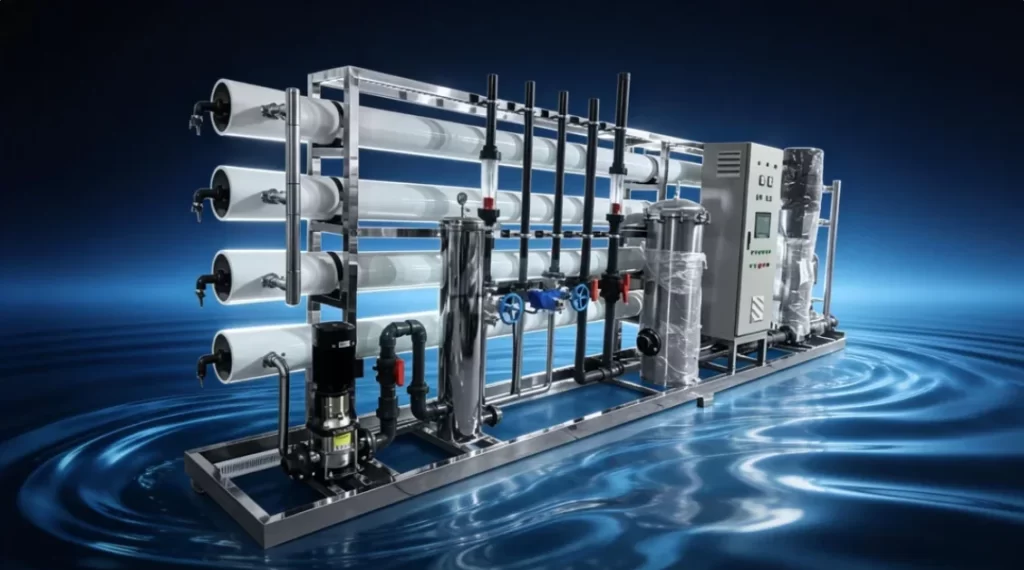
DTRO Plant Knowledge Guide

DTRO plant knowledge provides essential guidance for selecting and designing disc tube reverse osmosis systems used in high-salinity and high-pollution wastewater treatment, helping engineers understand membrane structure, anti-fouling flow channels, pretreatment needs, and operating pressures to ensure stable performance, reliable concentrate management, and long-term system durability in demanding industrial and landfill leachate applications.

DTRO Plant Knowledge related articles

25TH Underground Water Desalination Reverse Osmosis Plant Specifications

Test Title Company Industry

Reverse osmosis (RO) technology has become the cornerstone of modern industrial water treatment systems, offering unparalleled purification capabilities for a wide range of applications. This comprehensive guide explores the fundamental principles, system design considerations, and best practices for implementing RO systems in industrial environments.

Introduction to Industrial Reverse Osmosis Systems

Industrial reverse osmosis (RO) systems are widely used for producing high-purity water in manufacturing, municipal, and environmental projects. By using semi-permeable membranes and high pressure, RO technology effectively removes dissolved salts, bacteria, heavy metals, and organic contaminants from water.
These systems play a critical role in industrial water treatment, supporting stable production processes, reducing scaling and corrosion, and enabling water reuse. With growing global demand for sustainable water management, industrial RO systems have become essential infrastructure for many industries.

Key Components of an Industrial RO System

A complete industrial reverse osmosis system integrates several core components that work together to ensure efficient filtration and stable performance.
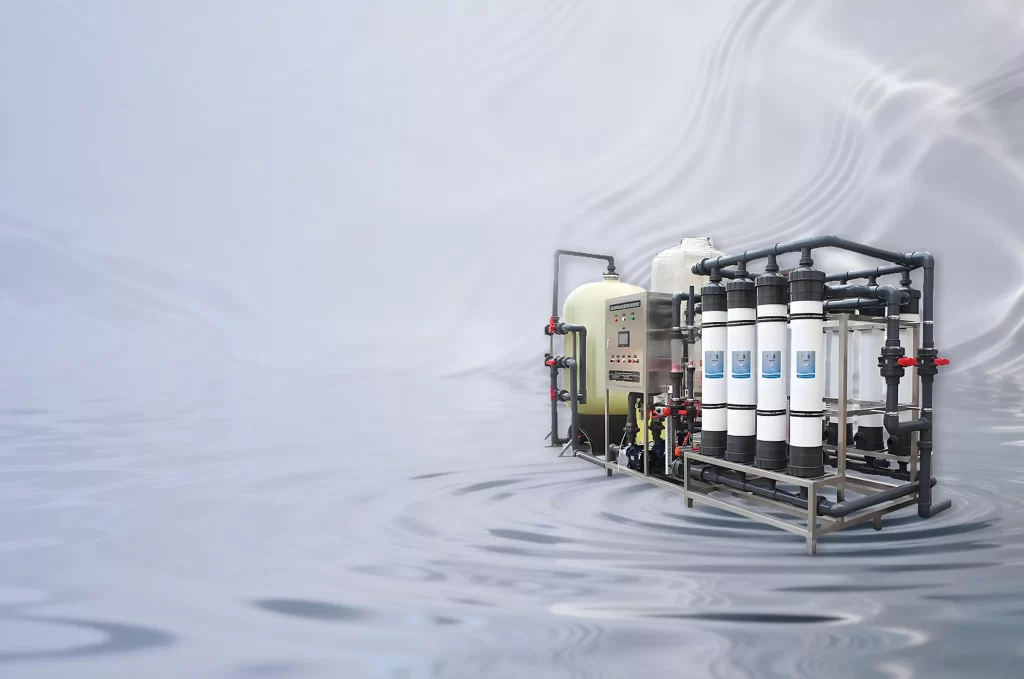

Ultrafiltration Equipment

Key UF Membrane Selection Factors

Ultrafiltration equipment knowledge helps users evaluate membrane types, pretreatment needs, and operating parameters to match specific water quality and capacity goals. Understanding fouling behavior, flux control, and cleaning strategies supports reliable UF system selection and long-term performance.

Key UF Membrane Selection Factors

Selecting the right UF membrane requires evaluating pore size, material properties, and module configuration against raw water characteristics and treatment objectives. Factors such as turbidity, organic load, and microbial content influence fouling risk and cleaning frequency, while operating pressure and flux determine productivity and lifespan. Proper membrane selection ensures stable filtrate quality, energy efficiency, and compatibility with pretreatment and downstream processes across diverse industrial and municipal applications.

UF System Configuration and Operation Design

Effective UF system configuration integrates pretreatment, membrane modules, and hydraulic control to maintain stable filtration performance under varying water conditions. Design considerations include crossflow or dead-end operation, backwash and chemical cleaning strategies, and instrumentation for monitoring pressure and flux. Optimized configuration reduces fouling, extends membrane service life, and ensures consistent filtrate quality, supporting reliable operation in both standalone and integrated treatment systems.

Morui Website Privacy Policy Banner

Test Title

Reverse osmosis (RO) technology has become the cornerstone of modern industrial water treatment systems, offering unparalleled purification capabilities for a wide range of applications. This comprehensive guide explores the fundamental principles, system design considerations, and best practices for implementing RO systems in industrial environments.

Introduction to Industrial Reverse Osmosis Systems

Industrial reverse osmosis (RO) systems are widely used for producing high-purity water in manufacturing, municipal, and environmental projects. By using semi-permeable membranes and high pressure, RO technology effectively removes dissolved salts, bacteria, heavy metals, and organic contaminants from water.
These systems play a critical role in industrial water treatment, supporting stable production processes, reducing scaling and corrosion, and enabling water reuse. With growing global demand for sustainable water management, industrial RO systems have become essential infrastructure for many industries.

Key Components of an Industrial RO System

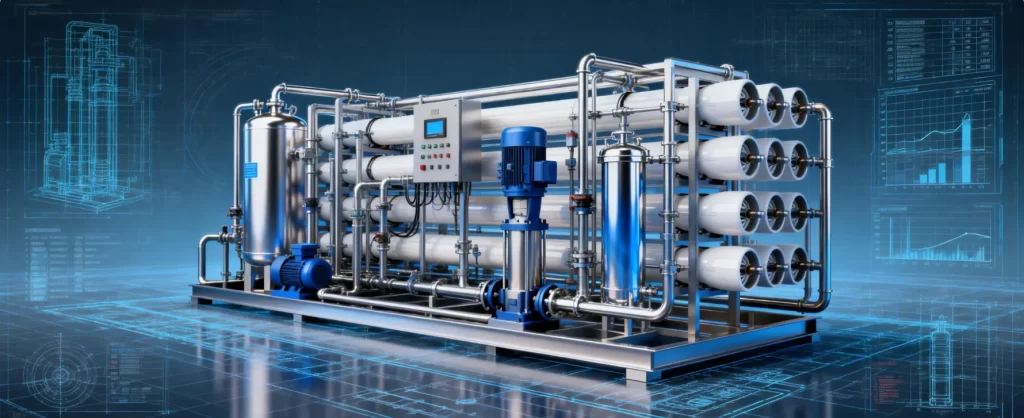
A complete industrial reverse osmosis system integrates several core components that work together to ensure efficient filtration and stable performance.
RO Reverse Osmosis OEM ODM Services Banner

Test Title

Reverse osmosis (RO) technology has become the cornerstone of modern industrial water treatment systems, offering unparalleled purification capabilities for a wide range of applications. This comprehensive guide explores the fundamental principles, system design considerations, and best practices for implementing RO systems in industrial environments.

Introduction to Industrial Reverse Osmosis Systems

Industrial reverse osmosis (RO) systems are widely used for producing high-purity water in manufacturing, municipal, and environmental projects. By using semi-permeable membranes and high pressure, RO technology effectively removes dissolved salts, bacteria, heavy metals, and organic contaminants from water.
These systems play a critical role in industrial water treatment, supporting stable production processes, reducing scaling and corrosion, and enabling water reuse. With growing global demand for sustainable water management, industrial RO systems have become essential infrastructure for many industries.

Key Components of an Industrial RO System

A complete industrial reverse osmosis system integrates several core components that work together to ensure efficient filtration and stable performance.
Factory Overview

MoRui-Test-post-C

Reverse osmosis (RO) technology has become the cornerstone of modern industrial water treatment systems, offering unparalleled purification capabilities for a wide range of applications. This comprehensive guide explores the fundamental principles, system design considerations, and best practices for implementing RO systems in industrial environments.

Introduction to Industrial Reverse Osmosis Systems

Industrial reverse osmosis (RO) systems are widely used for producing high-purity water in manufacturing, municipal, and environmental projects. By using semi-permeable membranes and high pressure, RO technology effectively removes dissolved salts, bacteria, heavy metals, and organic contaminants from water.
These systems play a critical role in industrial water treatment, supporting stable production processes, reducing scaling and corrosion, and enabling water reuse. With growing global demand for sustainable water management, industrial RO systems have become essential infrastructure for many industries.

Key Components of an Industrial RO System

A complete industrial reverse osmosis system integrates several core components that work together to ensure efficient filtration and stable performance.
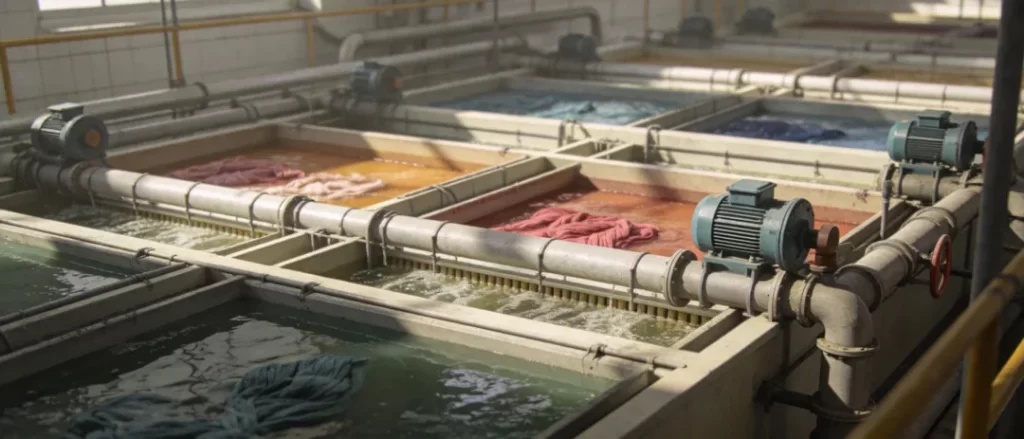
Textile and Dyeing Industry Effluent Treatment

MoRui-Test-post-B

Reverse osmosis (RO) technology has become the cornerstone of modern industrial water treatment systems, offering unparalleled purification capabilities for a wide range of applications. This comprehensive guide explores the fundamental principles, system design considerations, and best practices for implementing RO systems in industrial environments.

Introduction to Industrial Reverse Osmosis Systems

Industrial reverse osmosis (RO) systems are widely used for producing high-purity water in manufacturing, municipal, and environmental projects. By using semi-permeable membranes and high pressure, RO technology effectively removes dissolved salts, bacteria, heavy metals, and organic contaminants from water.
These systems play a critical role in industrial water treatment, supporting stable production processes, reducing scaling and corrosion, and enabling water reuse. With growing global demand for sustainable water management, industrial RO systems have become essential infrastructure for many industries.

Key Components of an Industrial RO System

A complete industrial reverse osmosis system integrates several core components that work together to ensure efficient filtration and stable performance.
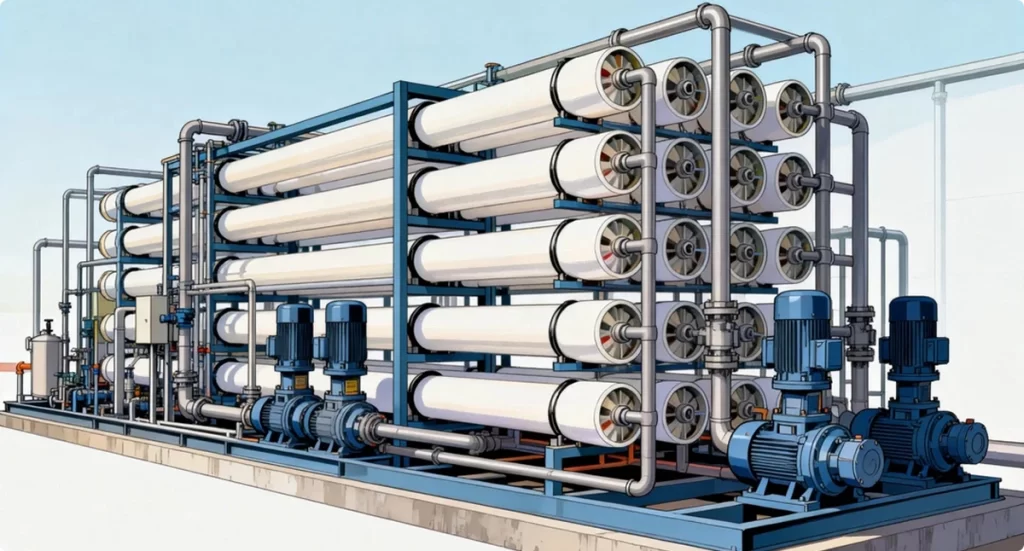
DTRO Plant Knowledge Can Support System Selection

DTRO Plant Knowledge Can Support System Selection

DTRO plant knowledge supports accurate system selection by explaining how disc tube membrane modules handle high-TDS and complex wastewater, guiding engineers in evaluating influent quality, recovery targets, fouling risks, and pressure requirements to ensure stable operation, efficient concentrate control, and reliable long-term performance in challenging treatment scenarios.

High-Salinity Wastewater Suitability

DTRO technology knowledge clarifies how disc tube membrane structures and open flow channels resist scaling and fouling under high-salinity or high-organic loads, helping engineers determine when DTRO is preferable to conventional RO, define pretreatment intensity, select pressure ratings, and design staged recovery strategies that balance permeate yield, membrane lifespan, and concentrate discharge compliance in landfill leachate, industrial brine, and hazardous wastewater applications.

Operating Pressure and Recovery Design

DTRO plant selection relies on understanding the relationship between operating pressure, flux stability, and recovery rate, enabling engineers to size high-pressure pumps, configure membrane stages, and calculate energy demand and concentrate ratios, while ensuring that the system maintains consistent permeate quality, avoids excessive fouling or compaction, and achieves dependable performance across variable influent conditions and long service cycles.

CONTACT US FOR EXPERT CONSULTATION